Ancient Greece Color
Art Coloring GroupBoard
4.384.00 Reviews
- Version
- 1.0.5
- Installs
- 50.00K
- Age Rating
- Everyone
Screenshots
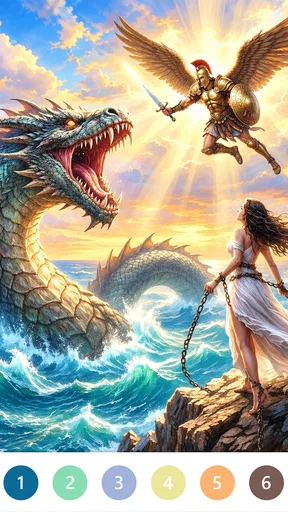

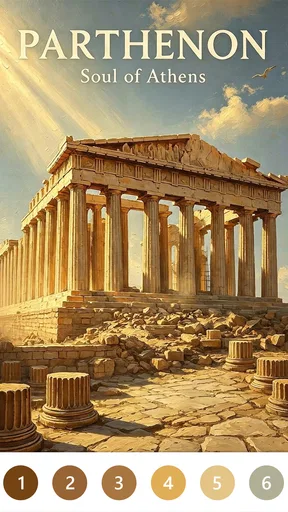



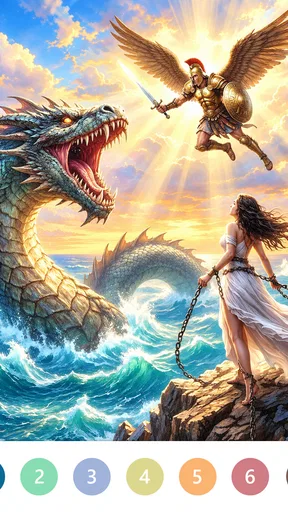

Our Review of Ancient Greece Color
 Analysis by Appyee
I spent time with Ancient Greece Color as a quiet, board-style coloring game built around the visual world of Greek mythology. Its appeal is easy to understand: instead of asking me to react quickly or manage a complicated strategy, it gives me a calmer task—filling illustrations connected with gods, heroes, temples, and old myths by following numbered color areas. That makes it a natural fit for short breaks, evening relaxation, or anyone who enjoys the satisfaction of completing an image one section at a time.
The game comes from Art Coloring Group and is free to start, with optional purchases ranging from $0.99 to $59.99 per item. It is rated for Everyone, so the theme is broadly accessible rather than designed around frightening mythology or mature presentation. I also found its identity quite focused: this is not a general-purpose drawing tool and not a competitive board game. It is a color-by-number experience using Ancient Greece as its central subject.
How Ancient Greece Color feels in everyday use
I find the everyday appeal of Ancient Greece Color is less about finishing quickly and more about having a small, self-contained task ready whenever I need a pause. Choosing a picture and working through it at my own pace makes the game easy to fit around an ordinary day, while the Greek imagery gives each session a distinct mood. The next section looks at how that simple starting action turns into a steady coloring rhythm.
A gentle pace that suits short sessions
The first thing I noticed is that the game’s idea naturally sets a slower rhythm. Color-by-number play does not depend on quick reflexes, so I can open it when I have only a few minutes and still make visible progress. That is useful during a coffee break, while waiting for an appointment, or at the end of the day when I want something more engaging than simply scrolling.
Its speed expectations are therefore different from those of an action game. I am not judging it by frame-perfect responses or rapid transitions. What matters more is whether the interface lets me select a color, identify the matching areas, and move around an illustration without making the process feel sticky. In normal use, the concept works best when the controls stay out of the way and let the artwork remain the focus.
There is also a practical benefit to the numbered format. I do not need artistic confidence before starting. A person who would hesitate to draw a temple, helmet, column, or mythological figure from scratch can still produce a finished picture by working through the marked sections. That lowers the entry barrier considerably, especially for children, casual players, and adults who want a creative activity without learning a full drawing system.
What happens during a heavier coloring session
A short session and a long session feel slightly different. At first, filling obvious areas is straightforward and rewarding. As more of the picture is completed, the remaining sections may become smaller or less visually prominent, so the task shifts from broad coloring to careful searching. This is where patience matters more than speed. I found that the experience is most comfortable when I treat each image as a small project rather than trying to finish everything in one sitting.
That approach also helps with device expectations. A coloring game can appear simple, but large illustrations, repeated touch input, and constant screen updates can make a session feel heavier than the store summary suggests. I would not install this expecting the same demands as a modern three-dimensional game, but I would still keep the device’s available storage and general condition in mind. Older or entry-level hardware may be perfectly suitable for this kind of play, yet the smoothness of navigation can depend on the phone or tablet as much as on the application itself.
One useful habit is to rotate between pictures instead of repeatedly forcing progress on a difficult one. If a particular mythological illustration contains many tiny areas, switching to another image can preserve the relaxing mood. This is a small but important distinction: the game is at its best when I use it as a flexible pastime, not as a task that must be completed under pressure.
Stability matters more than raw power here
Because the core activity is calm, interruptions are especially noticeable. A sudden pause, a missed tap, or a return to the previous screen can break the concentration that makes coloring enjoyable. I therefore judge reliability by whether the game supports a steady flow: opening an image, choosing colors, moving around the artwork, and returning later without turning a relaxing session into troubleshooting.
My general impression is that the game’s modest concept should make it approachable on a wide range of devices, but that should not be confused with a guarantee of identical behavior everywhere. The minimum operating-system requirement is Android 7.1, which gives it a relatively broad compatibility window. Still, an older phone with limited free space, an aging battery, or many background apps may feel less responsive than a newer device.
For recovery, I recommend leaving the game normally rather than repeatedly swiping it away during an unfinished session. I also avoid starting a long coloring session when the phone is already struggling with several demanding apps. Those habits are not special tricks for this title; they are sensible ways to protect continuity in any touch-based game where progress depends on repeated small actions.
Where the device can change the experience
A larger screen is probably the most meaningful hardware advantage for this particular game. On a tablet, small numbered sections should be easier to inspect and tap, and the artwork can feel more like a proper coloring page. On a compact phone, the same image may require more zooming, repositioning, and careful tapping. That does not make the phone version unsuitable, but it can make detailed pictures more tiring.
Screen brightness and touch accuracy also matter. Greek temples and mythological figures often rely on recognizable outlines and decorative details, so a dim display or a screen protector that reduces touch precision can make tiny areas harder to select. If I were setting this up for a child or for someone with less precise touch control, I would choose the largest comfortable display and keep the interface uncluttered.
Resource demands should be viewed in context. This is not the kind of game I would expect to consume attention through complex simulations, but artwork-heavy screens can still use more storage and memory than a purely text-based board game. Keeping some free space available is sensible, particularly if the device already has trouble updating or switching between apps. I would also avoid judging performance after the phone has become warm from unrelated heavy use, since that can make any game feel less responsive.
The Greek theme gives it a clear personality
The setting is more than a decorative label. Gods, heroes, temples, and myths give the coloring pages a recognizable visual direction, which makes the game easier to choose than an app with a completely mixed collection of subjects. If I already enjoy classical stories, ancient architecture, or ornamental illustrations, the theme provides a reason to return beyond the basic color-by-number mechanic.
At the same time, the theme will not appeal equally to everyone. Someone looking for animals, modern patterns, landscapes, or abstract mandalas may find the Ancient Greece focus too narrow. The game’s strongest quality is also its main limitation: it knows what it wants to be. I prefer that clarity to a vague collection of unrelated images, but readers should choose it because the subject interests them, not simply because they want any coloring app.
The mythological setting also makes it usable in a few specific situations. A parent could use it as a quiet creative activity for a child who is curious about ancient stories. A student might enjoy it as a visual break from reading about classical history. An adult could use the temple and hero imagery as a relaxing alternative to puzzle games that demand constant decision-making. None of these uses requires expert knowledge of Greek mythology; the theme works as atmosphere even when I do not recognize every figure.
How it compares with ordinary coloring and board games
Compared with a conventional coloring app, the numbered approach is less expressive but easier to begin. I cannot treat every section as a blank canvas and freely choose any artistic direction, yet I also do not need to decide which shades belong together. That trade-off makes Ancient Greece Color a better choice for guided relaxation than for someone who wants complete creative control.
Compared with a traditional board game on mobile, it is much less competitive and much more solitary. There is no need to learn a large ruleset before playing, and I am not waiting for another player to take a turn. The downside is that people who enjoy bluffing, tactical planning, or meaningful choices may find the coloring loop too passive. A strategy board game will offer more mental challenge, while this title offers a gentler sense of progress.
It also differs from a drawing application. Drawing software is preferable when I want to sketch my own interpretation of a Greek vase or hero, experiment with brushes, or build an image from an empty page. This game is preferable when I want a finished illustration framework and the small reward of completing it. Knowing that distinction prevents disappointment: the goal is guided completion, not open-ended art creation.
Free access and the role of optional purchases
The free price makes it easy to try without committing money first. That matters for a themed game, because the subject may appeal strongly to one person and not at all to another. I can discover whether the artwork and pace suit me before considering any purchase.
The optional items cover a broad range, from $0.99 to $59.99 each. That spread deserves attention before spending. For a casual player, the sensible approach is to use the free experience long enough to decide whether the game has become part of a regular routine. I would not make a large purchase simply because I had completed one enjoyable picture. The value depends on how often I return and how much I care about continuing with the available content.
This is also a game I would supervise more carefully on a shared family device. The Everyone rating makes the content broadly suitable, but age suitability and spending suitability are different questions. A child may enjoy the coloring while still needing an adult to handle purchases. Keeping that boundary clear is more useful than assuming a gentle art style automatically removes every practical concern.
Who will enjoy it, and who should skip it
I would recommend it to people who like calm, guided activities and have some interest in Greek mythology or classical imagery. It is especially suitable for players who want to make progress without being rushed, who enjoy completing visual details, or who find ordinary puzzle games too demanding after a long day.
I would be more cautious about recommending it to anyone seeking deep gameplay variety. If your ideal board game involves tactical choices, changing opponents, resource management, or a strong sense of competition, this will probably feel limited. The same is true if you want a professional drawing tool or a completely open coloring experience. In those cases, a strategy title or a full art app would be a better match.
People with limited vision or less accurate touch control should try it on their largest available screen. Small areas can turn a relaxing activity into a frustrating one, particularly when the phone display is cramped. That is not a reason to reject the game automatically, but it is a real trade-off worth considering before settling into detailed images.
My practical routine for getting more from it
I get the best results by treating each session as a short reset. I choose one image, work through the easiest numbered areas first, and stop when the remaining details begin to feel like effort rather than relaxation. Returning later keeps the activity pleasant and also lets me notice the composition as it develops instead of viewing the finished result only at the end.
For difficult sections, I find it more efficient to scan systematically rather than tapping randomly. I move across one part of the illustration, check the matching color, and then continue to the next area. This reduces repeated taps and makes small details easier to track. On a phone, zooming in only when necessary is also helpful; staying too close for too long can make it harder to understand where I am in the whole picture.
Another useful choice is matching the session to the device. I use a tablet when I want to work on fine details and a phone when I want a quick break. I also close unrelated demanding apps before a longer session, not because this game requires gaming-grade hardware, but because a clean device environment gives any touch-based experience a better chance of staying responsive.
Version, reach, and overall performance impression
The current release is version 1.0.5, and the game has reached over 50 thousand installs. Its average rating is 4.3 from around 800 ratings, with roughly 80 written reviews. Those figures suggest that it has found a modest audience rather than presenting itself as a massive mainstream game, and they fit my impression of a focused niche title built around a specific visual mood.
That audience size also sets realistic expectations. I see this as a specialized relaxation game, not a platform with the breadth of a major board-game collection. Its performance success comes from keeping the central interaction approachable: select, color, inspect, and continue. If the device handles the artwork comfortably, the lack of frantic action means the game can feel pleasantly undemanding.
My main reservation is not that the concept performs poorly, but that its calm loop can expose small annoyances. A detailed picture may require patience, a small screen may make precision harder, and the purchase range means I would pay attention before buying anything. Those limitations are manageable when I choose the right device and keep expectations aligned with a guided coloring game.
Final verdict for a quiet mythology-themed break
Ancient Greece Color is a focused board-style game that I would choose when I want a low-pressure activity with a strong setting. Its Greek gods, heroes, temples, and myths give the familiar color-by-number format a distinctive reason to exist, while the free entry point makes trying it straightforward. The Everyone rating also makes it suitable for a broad audience, provided adults keep an eye on optional spending for younger players.
My verdict is positive for relaxed, detail-oriented players, but conditional for anyone expecting deep board-game strategy or unrestricted drawing. On a suitable screen, with a little patience for small sections, it can turn a spare few minutes into a satisfying visual routine. I would install it for the theme and the calm pace, use a larger device for detailed pictures, and judge any optional purchase only after I knew I would genuinely return to the ancient-world artwork.
Verdict
Strengths of Ancient Greece Color
- Relaxing coloring experience inspired by Greek history and mythology.
- Simple controls make coloring accessible for beginners and casual players.
- Wide range of illustrations featuring gods, heroes, temples, and artifacts.
- Useful for improving focus, creativity, and hand-eye coordination.
- Works well as a quiet offline activity during travel or downtime.
Limitations of Ancient Greece Color
- Some detailed drawings may feel difficult to complete on a small screen.
- Color choices can be limited in certain illustrations.
- Repeated coloring mechanics may become monotonous over time.
- Ads or locked content may interrupt the experience for some users.
- Not ideal for users seeking puzzles, challenges, or active gameplay.
Other Releases by Art Coloring Group
View All
Bible Color Paint By Number
Board4.8

Nostalgia Color by number game
Board4.4

Macabre Color Paint By Number
Board4.8

Black Color Paint By Number
Trivia4.8
Similar Picks in This Category
View All
Ludo King®
Gametion4.1

Ludo
Yarsa Games4.6

Tile Master® - Matching Game
Higgs Studio3.6

Checkers Online
CC Games4.6

Dominoes
Loop Games4.7

Chess
Chess Prince4.6
Frequently Asked Questions
What is Ancient Greece Color?
Ancient Greece Color is a coloring app inspired by Greek history, mythology, architecture, and legendary characters. It offers illustrated scenes and themed artwork that users can color using a selection of digital tools and shades. The app is designed for casual entertainment and relaxation, making it suitable for users who enjoy creative activities and classical Greek themes.
Is Ancient Greece Color suitable for children?
Ancient Greece Color can be suitable for children, especially those interested in mythology, history, or artistic activities. However, parents should review the available artwork and settings before allowing younger children to use it, since age suitability may vary between illustrations. It is also recommended to check whether the app includes advertisements, purchases, or external links that could affect a child’s experience.
Does Ancient Greece Color work without an internet connection?
Some features of Ancient Greece Color may be available offline after the application and its artwork have been installed, allowing users to color without a continuous internet connection. Nevertheless, internet access may still be required for downloading additional content, displaying advertisements, synchronizing progress, or using sharing features. Availability can depend on the device, app version, and content included.
Does Ancient Greece Color include in-app purchases or advertisements?
The monetization model of Ancient Greece Color may vary depending on the platform and version available on Android or iOS. Users should review the store listing before downloading to determine whether advertisements, premium artwork, subscriptions, or optional purchases are included. Checking these details is particularly important for parents and anyone who prefers a completely uninterrupted coloring experience without unexpected costs.
What devices are compatible with Ancient Greece Color?
Ancient Greece Color is intended for mobile devices running a supported version of Android or iOS, but exact compatibility depends on the developer’s current requirements. Before downloading, users should check the application’s official store page for the minimum operating-system version, storage needs, and device restrictions. Keeping the phone or tablet updated can also help prevent performance or installation problems.
Play our best games!


